The Gray Zone, between peace and war


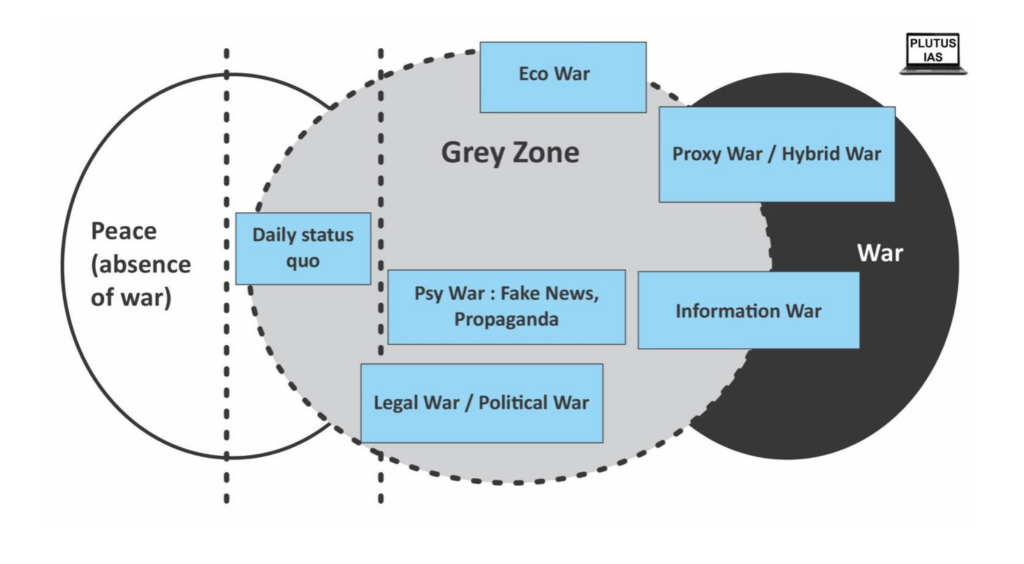
In the 21st century, conflict is no longer confined to battlefields or declared wars. Instead, it increasingly unfolds in the shadows—through cyberattacks, disinformation campaigns, economic pressure, and covert influence. This evolving landscape is often described as the “gray zone,” a space between peace and war where state and non-state actors pursue strategic objectives while avoiding direct military confrontation.

Within this gray zone, hybrid warfare has emerged as a dominant strategy. By blending military capabilities with non-military tools such as information manipulation, political interference, and technological disruption, actors are able to exploit vulnerabilities in open societies. These methods are designed not only to weaken adversaries, but to do so in ways that remain ambiguous, deniable, and difficult to respond to under traditional frameworks of international law and defense.

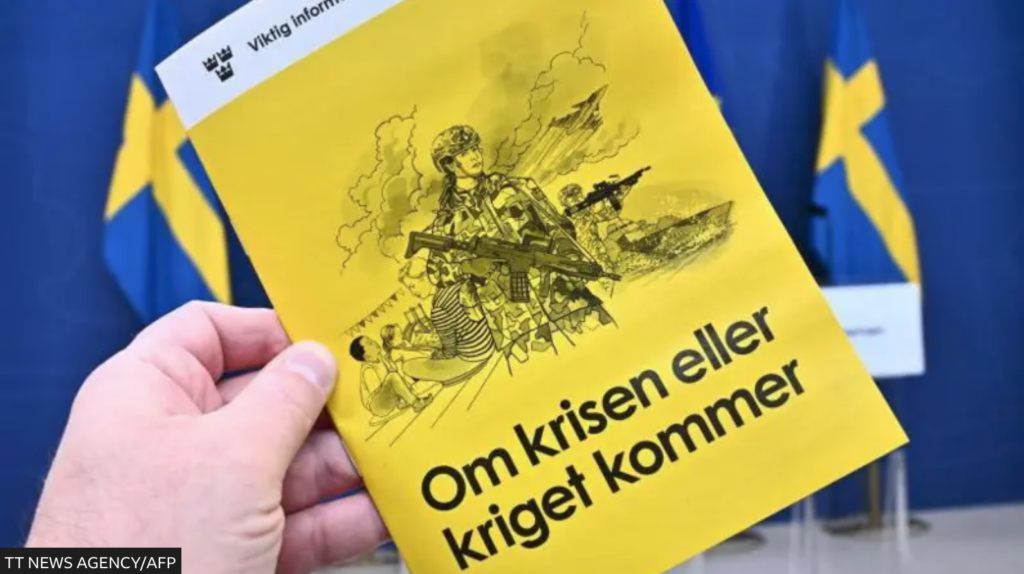
As the nature of conflict shifts, so too must the concept of defense. Civil defense is no longer limited to emergency response during wartime; it has become a continuous, proactive effort to strengthen societal resilience. Protecting critical infrastructure, safeguarding democratic institutions, and equipping citizens to navigate information threats are now essential components of national security.


Chronicle of the Governors’ Association: Resilience and Civil Defence

The 121 year old Governors’ Association (“To Our Avail”) may have acquired relevance again as a possible local support system in times of crisis.

The 2019 publication on the Nieuwendam Governors’ Association (“To Our Avail”) documents a long-lived Dutch mutual sickness fund whose resilience rested less on formal rules than on enduring norms of trust, reciprocity, and social cohesion. Although its original economic function declined with the rise of the welfare state, the association persisted as a social network, preserving cooperative practices and relationships. This case supports the argument of Arjen Boin that small, local associations are essential to civil defence and societal resilience. Such organisations provide the social infrastructure needed for coordination and mutual support in times of crisis, demonstrating that resilience is not only built by central institutions but also sustained from the bottom up.

See also: The 2019 publication of a Chronicle of the Governors’ Association: an Investigation into the Resilience and Longevity of the Co-operative Structure of the Communal Sickness Fund ‘To Our Avail’ in the Research Data Journal for the Humanities and Social Sciences https://doi.org/10.1163/24523666-00401004

Chronicle of a Governors’ Association

Title: Chronicle of the Governors’ Association: an Investigation into the Resilience and Longevity of the Co-operative Structure of the Communal Sickness Fund ‘To Our Avail’

Journey of the Razzia (Rotterdam, Schiedam)

Title: Reis van de Razzia: Een Oral History Project Over de razzia van RotterdamArticle

Stemmen van de Razzia

For the foundations “De Zoek naar Schittering” and “Reis van de Razzia” a film was made about the raid of Rotterdam and specifically about the Sluisjesdijk assembly point. For the film, which consists of 6 separate chapters, the testimonies of Nelis Bakker, Bastiaan Diepenhorst, Tijmen van Veen and Leendert Hordijk with Sietske de Hoop were used. On the Sluisjesdijk in Charlois, a RET bus garage was put into use after the war. A facade text and a panel are now being placed there to mark and commemorate this history. On November 9, the exhibition ‘Voices of the raid’ and a series of activities will start in the Dokhuis in Rotterdam, which can be visited until December 1 2024. The project was initiated by Fenneke Hordijk, daughter of Leendert. See also: www.verhaalvanmijnvader.nl


Friends in a Cold Climate now in the Journal for Oral History


The project “Friends in a Cold Climate”, about city twinning and youth exchanges in the turbulent 60s and 70s, is described in detail in the Oral History Journal Autumn 2024 vol. 52. The city of Schiedam once participated in these international exchanges. Perhaps an idea to pick up the old idea again to celebrate the 750th anniversary of the municipality of Schiedam? It may also be relevant for the future, looking at the divisions in Europe. Historian Timothy Snyder indeed describes a method in “On Freedom” that seems to connect with what happened then in the 60s/70s. Boomers overturned the existing social relations. See also the interviews: https://ssh.datastations.nl/dataverse/root/?q=friends+cold


One Day Europe Will be One, for Real (3) From the Project ‘Friends in a Cold Climate’

Jean-Francois on de dangers of extreme right politics


Jean-Francois has been deputy mayor and consular of Vienne, France, since 40 years. at the age of 16, Jean-Francois began his involvement with the Comité Jumelage, the twinning committee in Vienne which is focused on international exchanges. The roots of these exchanges trace back to 1956 when mayors Dieter Roser of Esslingen and Lucien Hussel of Vienne decided to collaborate, marking a pivotal moment after two devastating wars. They recognized the need to connect with young people as a means of securing a peaceful future, breaking the cycle of war that had occurred every 30 years.

“Since 1956, the first connection with Esslingen, Vienne has been friends. It’s a long way. And each mayor has continued and perpetuated the jumelage and the contact with Europe. This is very important. The idea of people in France is it’s always Germany who is leader in Europe. And some people say that it is not normal. I say and, a lot of people have the same opinion, that it is very important for us to have politics and a government, the two governments, work all together, hand in hand, because we have no other possibility.”

“It is not an economic war between the two states. It is a mutual comprehension. And if we have the possibility to explain that, it is very important. But with the new movement, extreme right, and this movement, which are to say, French from French people, we have no connection with the other. It is not at all a good solution. We must continue all together. We countries must continue all together. Can you imagine that the extreme right movement, when they are in a city to be mayor, they say, The city for the city. Don’t see the other. When you are election for department, they say, “I speak only for my department, not the other. When they try to have the region, they say only my region, the other.”

“And when they postulate the idea to be president of French Republic, they say we don’t look outside, we want only France, industry in France, no connection with the other. Can you imagine that? It is absolutely the great risk of democracy and the great risk of war. Mitterrand, François Mitterrand, said always, if extreme right are in the government, in the possibility to go as the leading force, it is a war in a few years after. “

“And Mitterrand was a great historian. François Mitterrand has known the war. He knows everything, everything of the war. He knows the atrocities of the war. He knows this moment which shouldn’t return. And Mitterrand was really clever, very clever, when he said, “No extreme right. If you have extreme right, you have war. “

For the complete interview from the interview project Friends in a Cold Climate see: https://doi.org/10.17026/SS/IOMK6R

One Day Europe Will be One, for Real (part 1)

“Eens Wordt Europa Werkelijk Eén” is a heading in an article by the Foundation Schiedamse Gemeenschap dated March 1, 1964. The town of Schiedam had just started to connect to other European towns.

”There is no future for the people of Europe other than in union” Jean Monnet had said. In that same spirit, exchanges were organised between Esslingen in Germany, Neath in Wales, Schiedam in Holland and Vienne in France, expanding to more towns later on.

Screenshot

Connie was 20 year old in 1970 and had started to organise youth-exchanges for the Foundation Schiedamse Gemeenschap. The participating youths were of a generation that had come to its own in the roaring sixties. However, international travel was still special for most and the Second World War was not yet forgotten, at least not with the parents of the youths.

Screenshot

Friends in a Cold Climate is an oral history project that traces the young travellers of then in a Europe that was becoming ever more united. The interviews are archived and published by DANS, the digital archive of the KNAW (Royal Netherlands Academy of Arts and Sciences).

https://doi.org/10.17026/SS/MSNIUA

This image has an empty alt attribute; its file name is Screenshot-2024-04-16-at-14.17.00-1024x654.jpg

From Vienne, France to Schiedam, the Netherlands

Jean-Francois: “when I was young, we don’t speak about Germany, we speak about Bosch. The war was still in the mind of my grandfather and grandmother, because they have lived so terrible period, terrible moment. What they have done during the last war. 

Now everything have changed, 70 years after the war. But I remember always, and when I made the first exchange in ’72 in Schiedam. I was in my host family, and in this host family we are two from two different countries, one from France, myself, and in the same room slept someone from Germany. And at this period, of course in ’72, no mobile phone, nothing. I phoned sometimes to my family, to my mother, and I said to my mother, “I am in the host family, I am with the German people. 


I remember, I have cried. I have cried. I am 16, I am very young. It is my first time outside Vienne, outside France. And I say to my mother, “Mom, can you imagine that I am with a German in the same host family? She said, “But you are in the Netherlands, you are not in Germany. You can imagine in ’72, we are in ’72, and still, and the idea of my grandmother my grandfather and also my mother. You are with German people in a host family from the Netherlands. It is very curious. I said it was the choice of the organization. Then of course this German, who was leader of the group of Esslingen, was fantastic. We connect all together. 

Since the year ’72, I’m engaged in a lot of associations. Popular education, like Club Léo Lagrange, which is also a member of the Twinning Committee. It is, in fact, a group of associations and the International Exchange Committee. So I am very, very engaged in this association and I know a lot of people.”